RITA McBRIDE
wunderkammer
February 14 - March 8, 2026
Richard Neutra's Galka Scheyer House
1880 Blue Heights Drive, Los Angeles, CA 90069
Rita McBride
wunderkammer
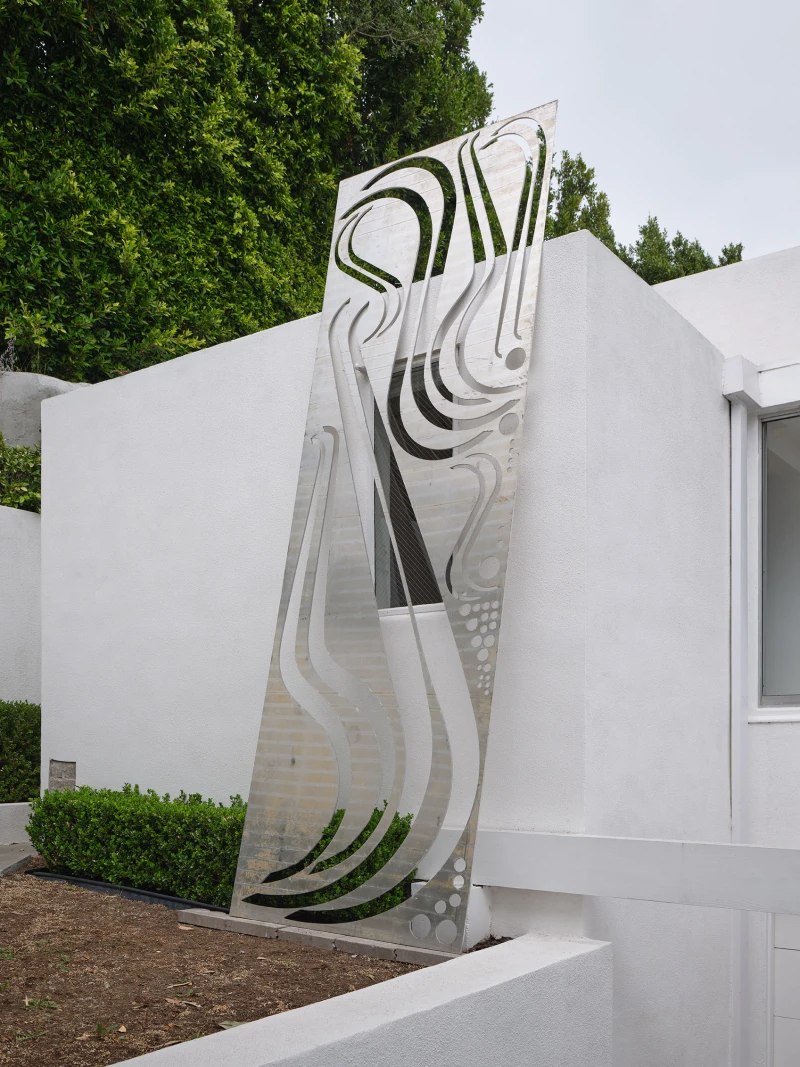
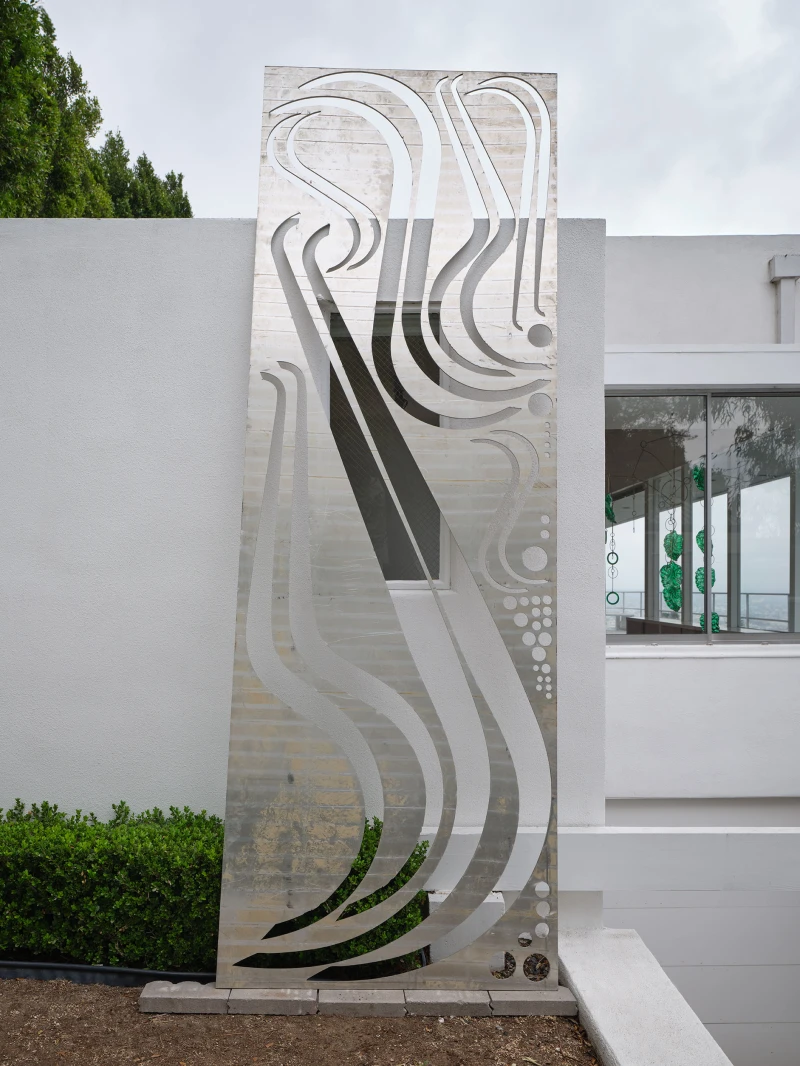
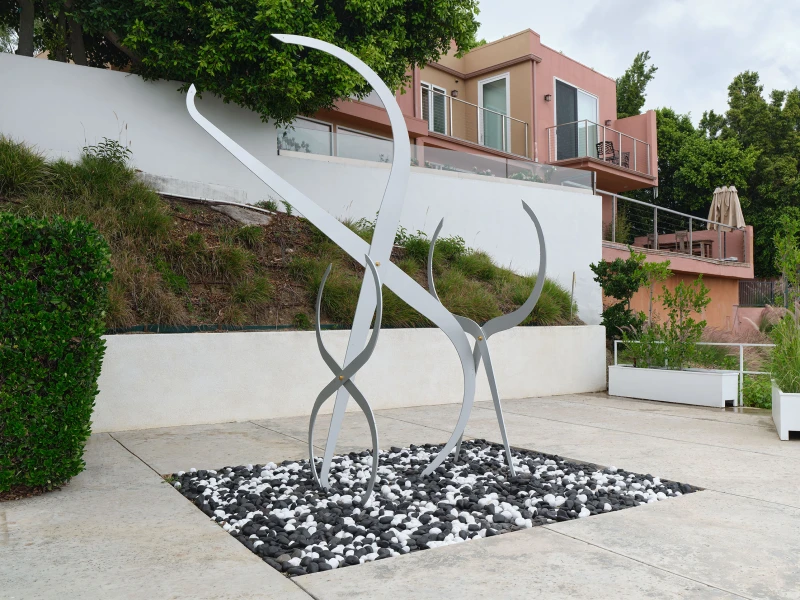
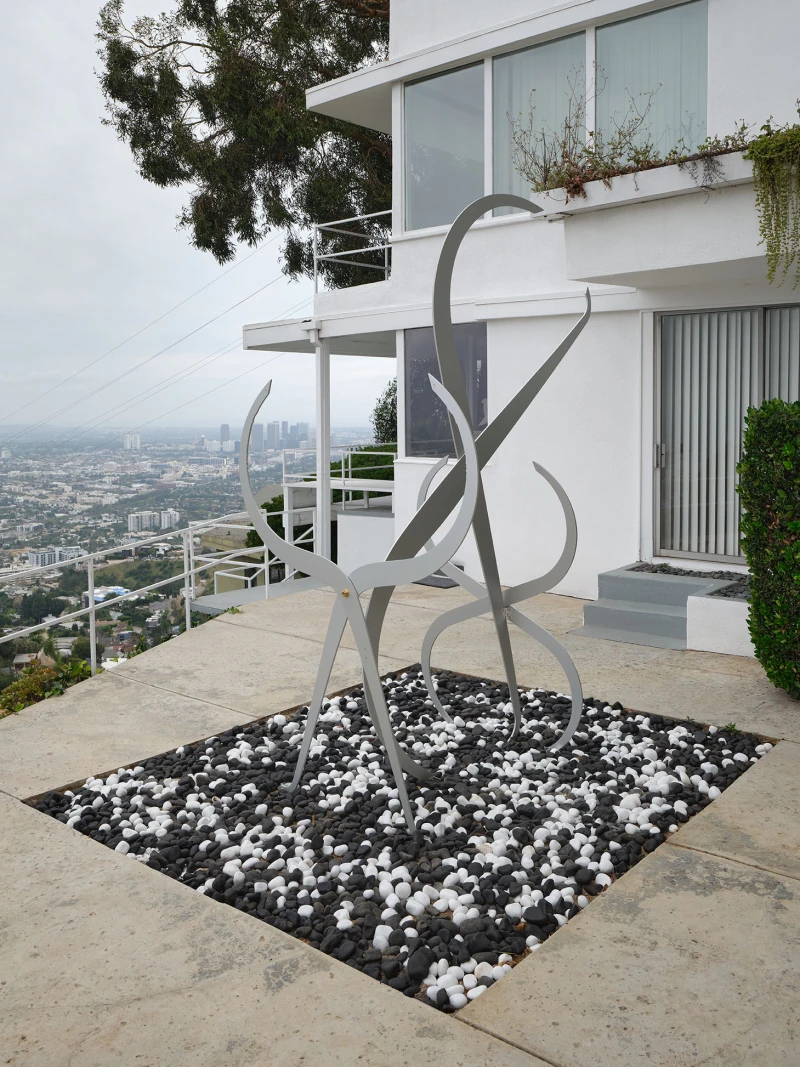
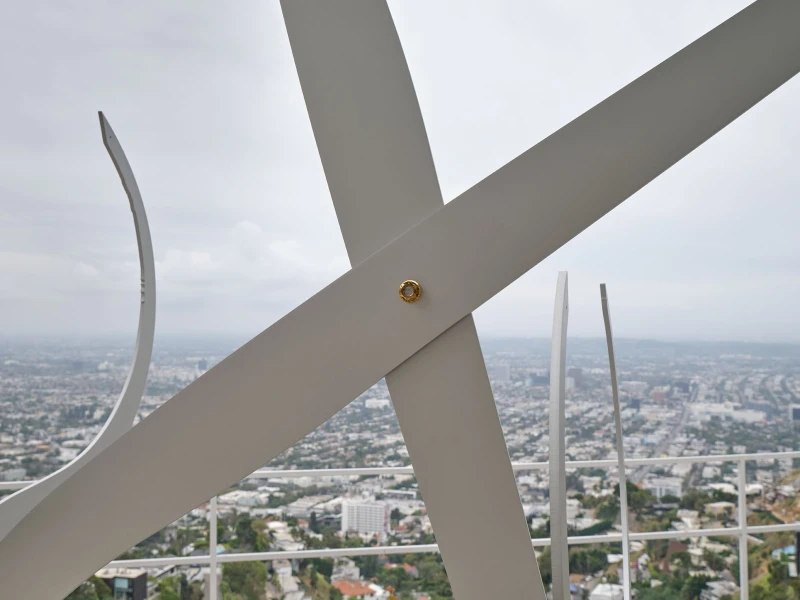
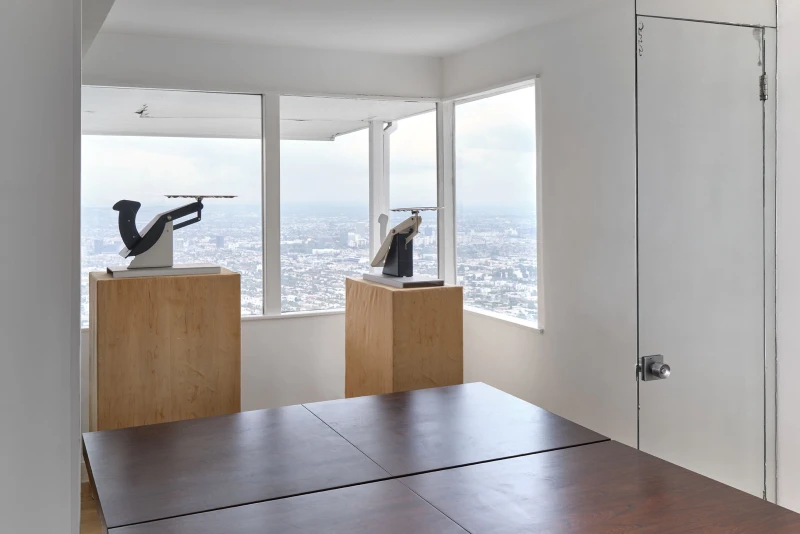
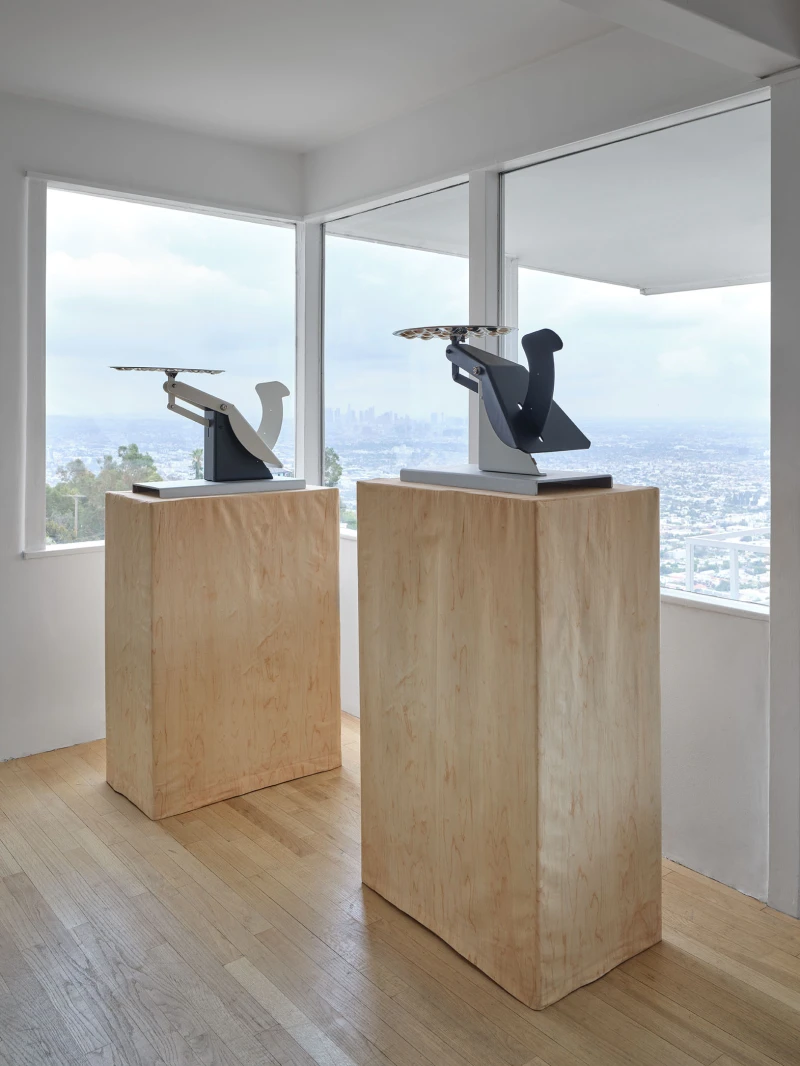
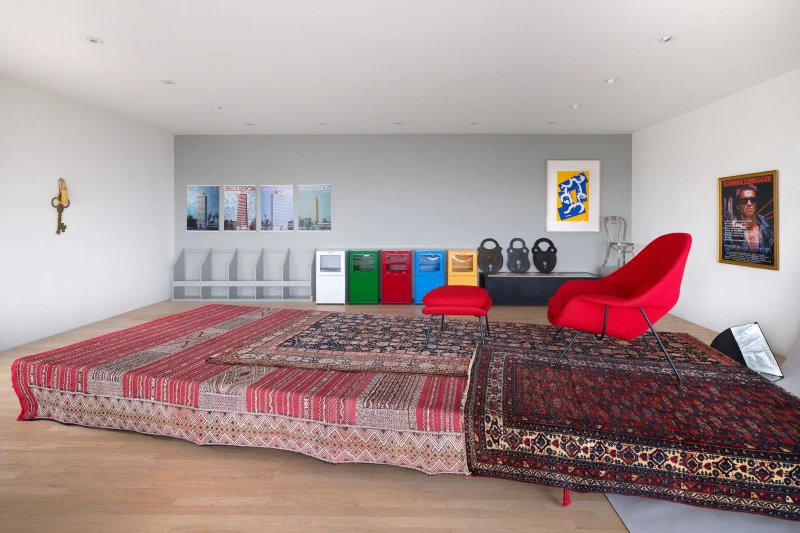
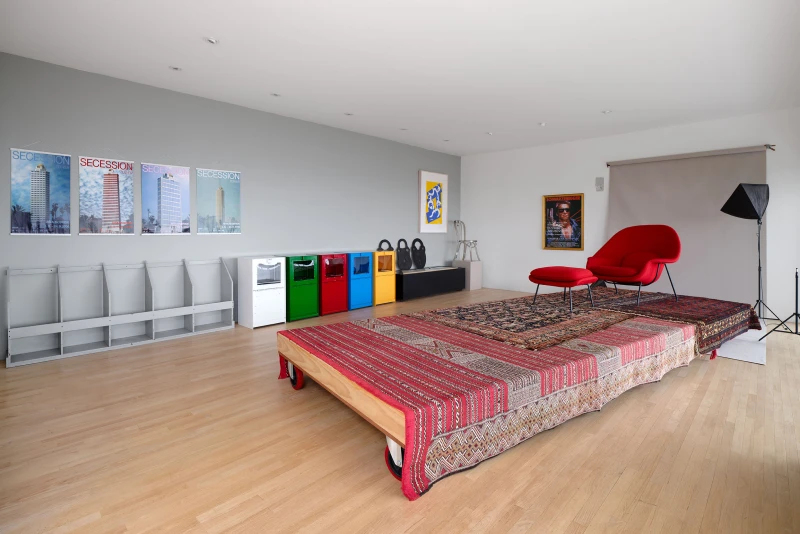
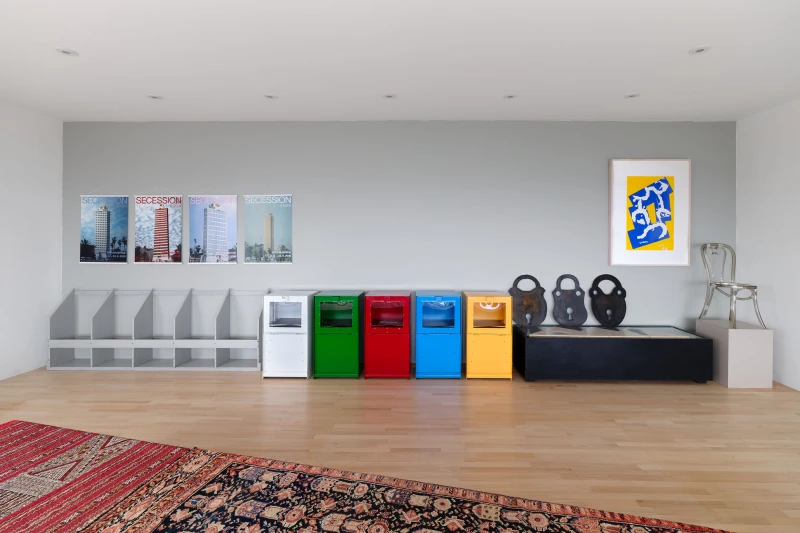
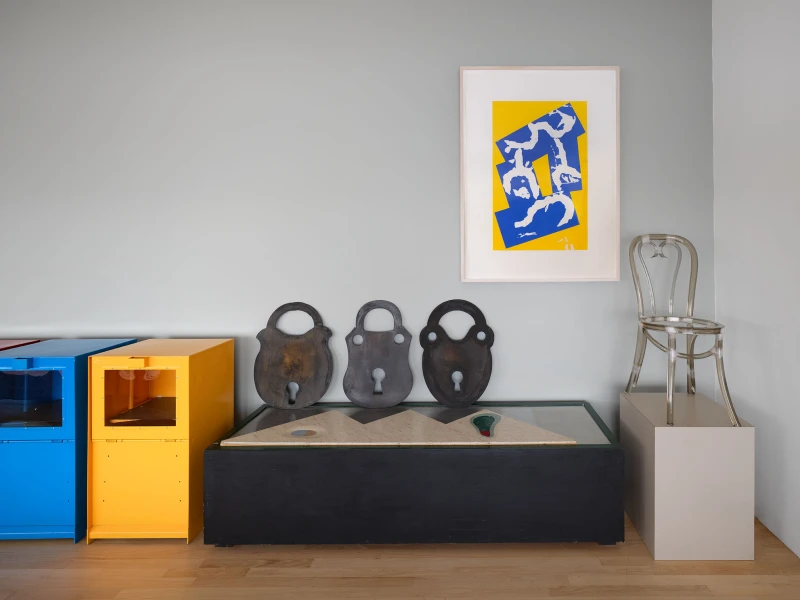
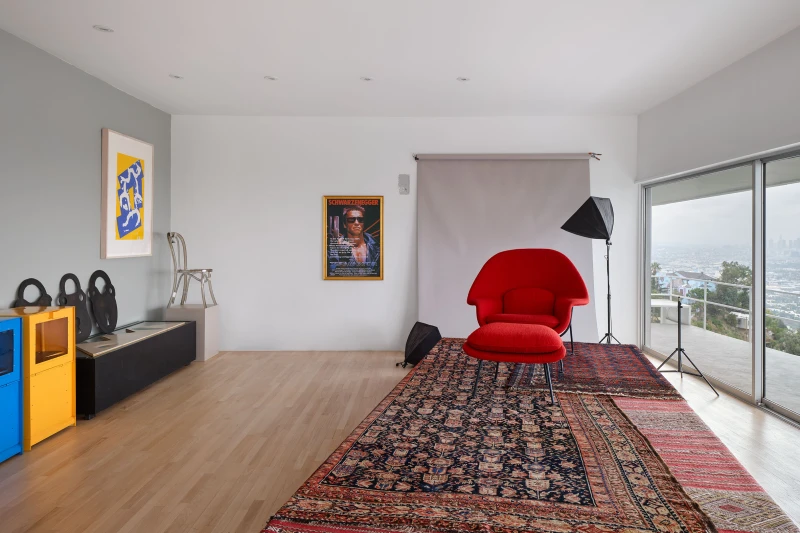
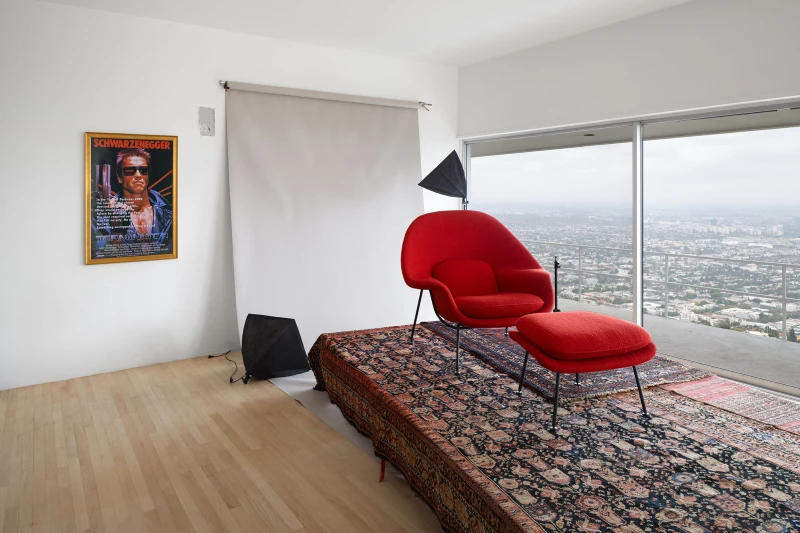
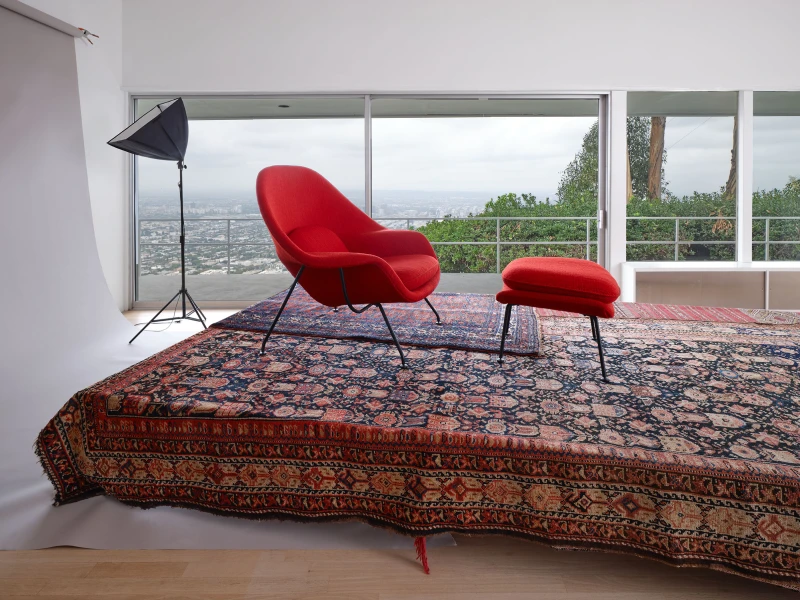
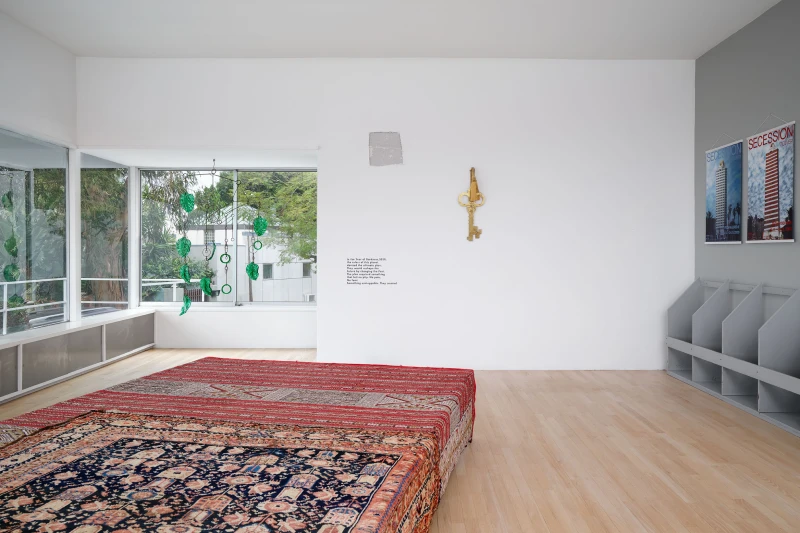
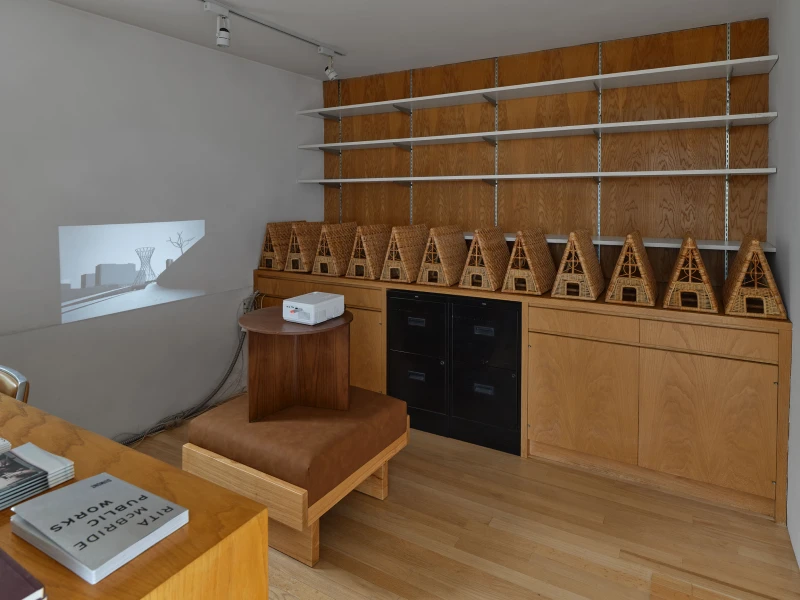
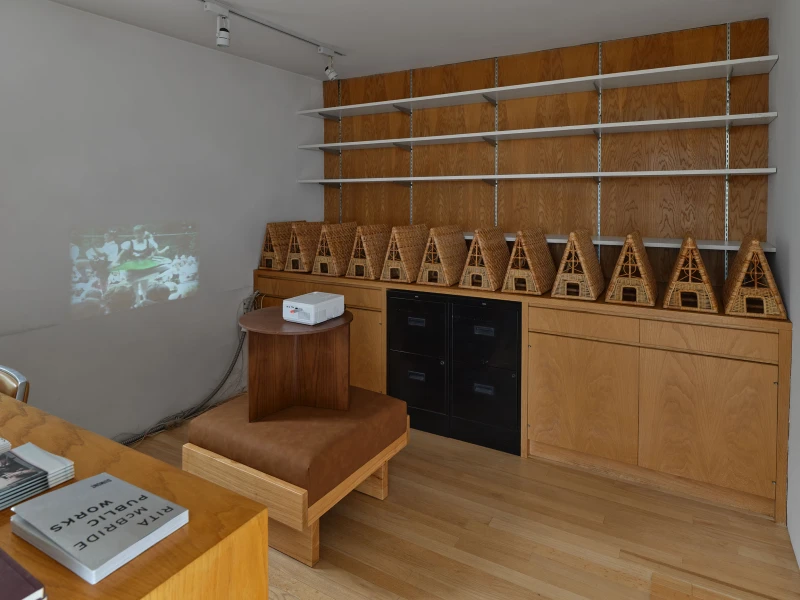
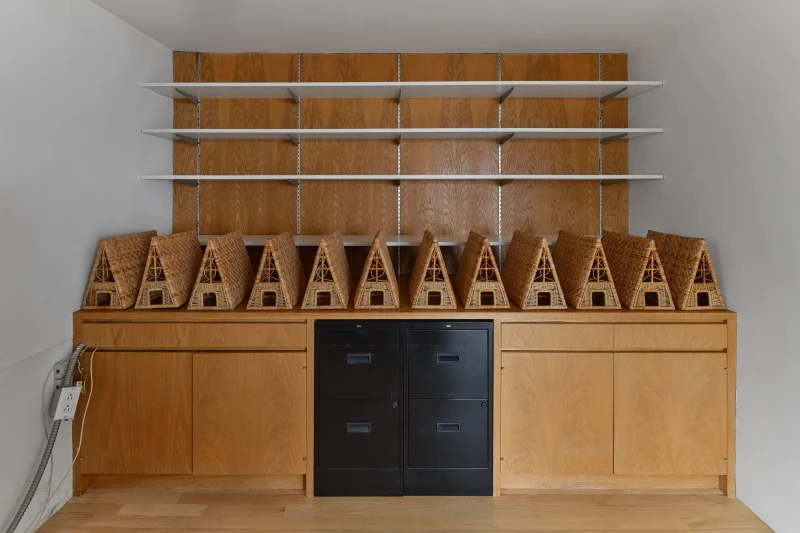
Presented by Del Vaz Projects and OKEY DOKEY KONRAD FISCHER, wunderkammer is an installation by Rita McBride at Blue Heights Arts & Culture—located at the house that the architect Richard Neutra designed for the German-Jewish émigré, artist/art collector, dealer, and educator Galka Scheyer in 1934. wunderkammer begins with McBride clearing space in her studio to create a singular, novel artwork. The circumstance of this rearrangement results in an amalgamation of past and in-process works hung and placed randomly. Situated similarly in this domestic setting (without chronology, rhythm, or reason), McBride’s works—often engaging civic space, urban infrastructure, and industrial fabrication—mold into compartmental, eclectic fixtures. While every element originates from a specific point in the evolution of her practice, here, each piece functions as a neighbor—relevant in its immediate relation to the artwork that it surrounds and the architecture that surrounds it. Moving from one object to the next is kinetic rather than choreographed; there is potential for perpetual reordering.
wunderkammer marks the final artistic intervention at 1880 Blue Heights Drive before the restoration of Neutra’s original design commences. While this home reflects the twentieth-century ideals of biorealism—a functional place to live in nature—it is not emblematic of Neutra’s Case Study houses. This space was designed to address the particular needs/desires—some documented, some discovered—of an individual’s profession and lifestyle. wunderkammer’s contents contend with a palimpsest of contemporary renovations and reside amongst the house’s faded trace of Modernism. During the structure’s transitional phase, the artist’s freedoms are measured against the architect’s concerns: the future preservation of the past. McBride’s variable arrangements inspire a dance between artmaking and engineering—a negotiation of room for invention. Each work invokes the assessment of a bearing wall, the depth of a floorboard, and whether a stairwell is up to code. The installation (outdoors, indoors, and across various rooms) catalyzes a sequence of inquiries, limitations, and parameters—and their resulting possibilities.
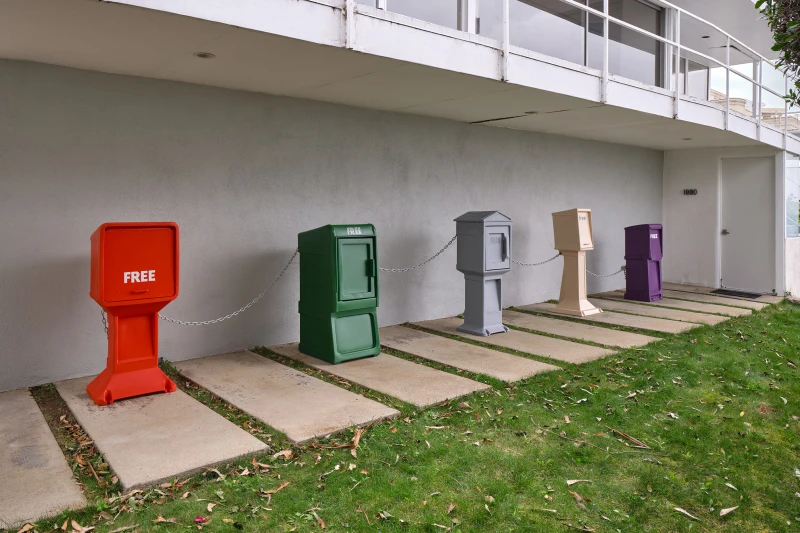
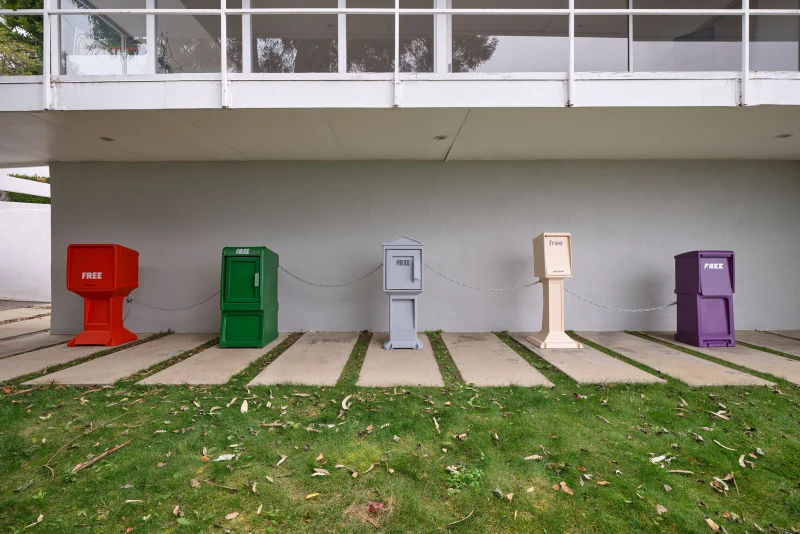
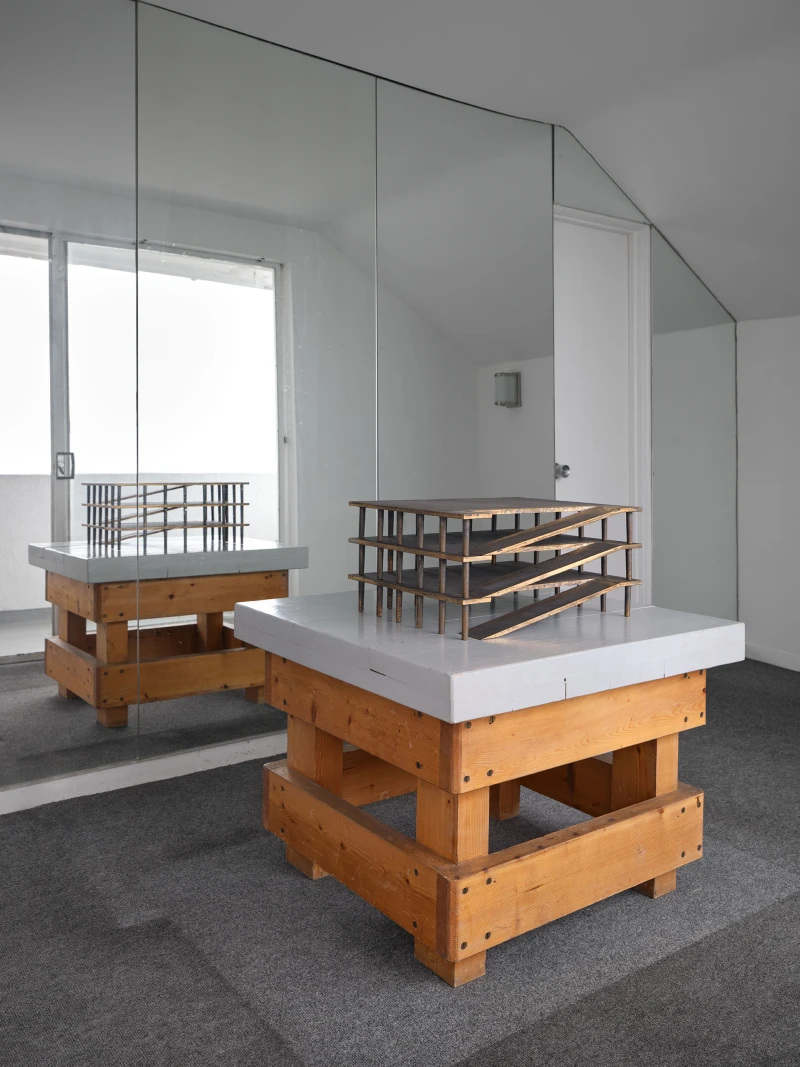
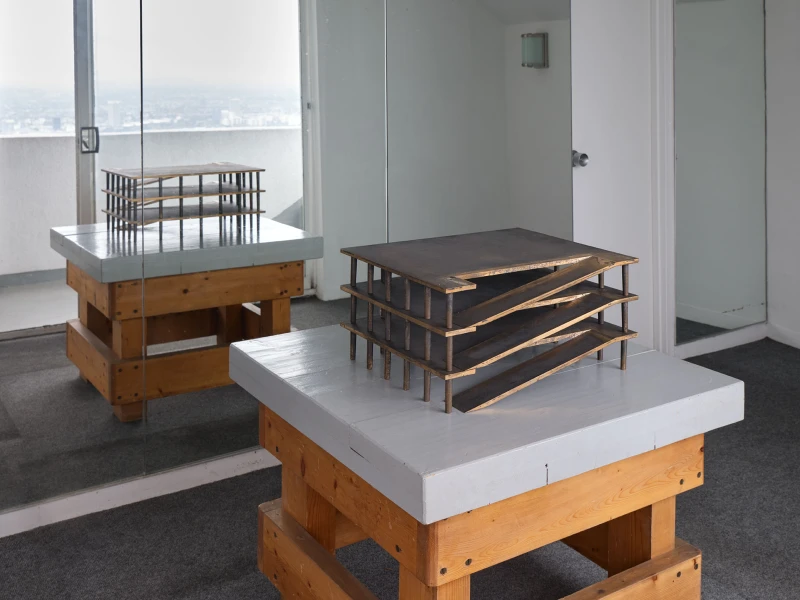
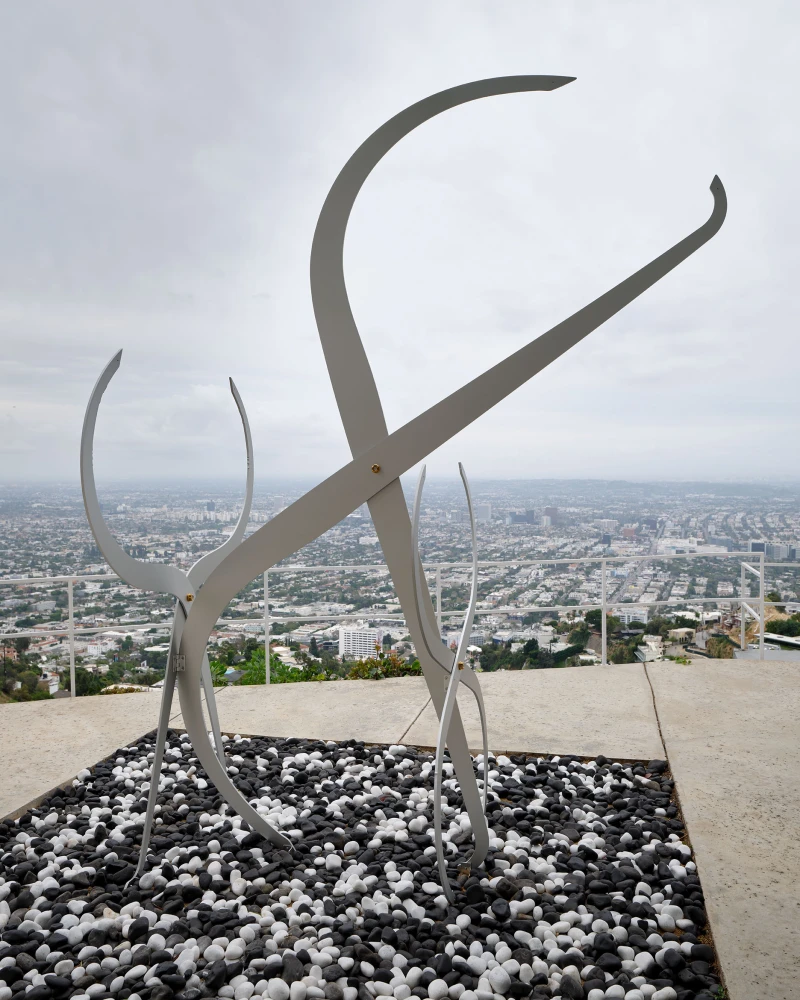
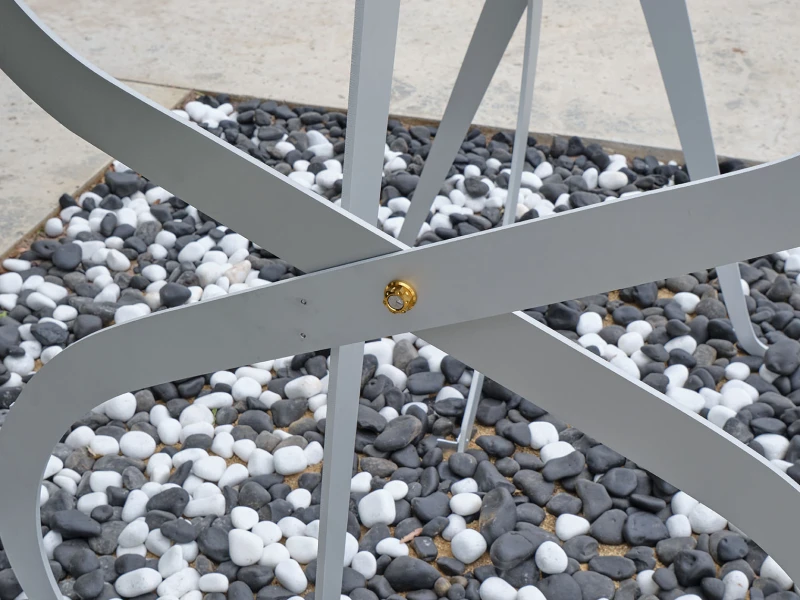
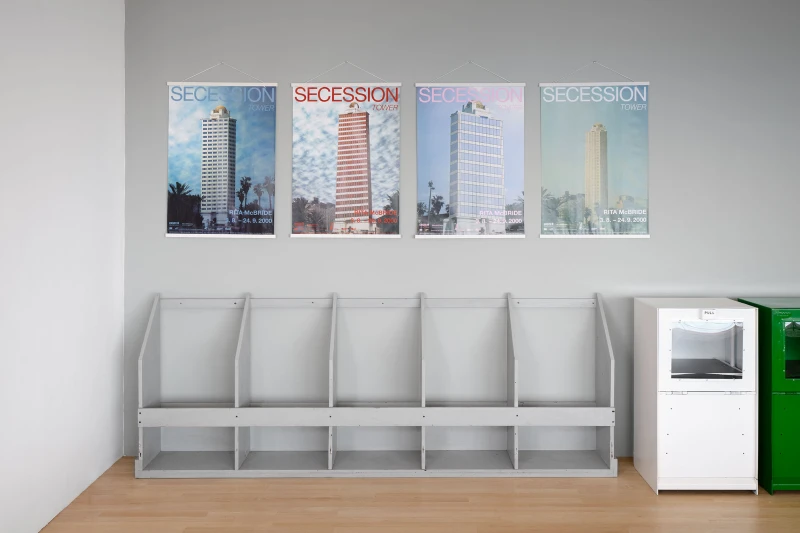
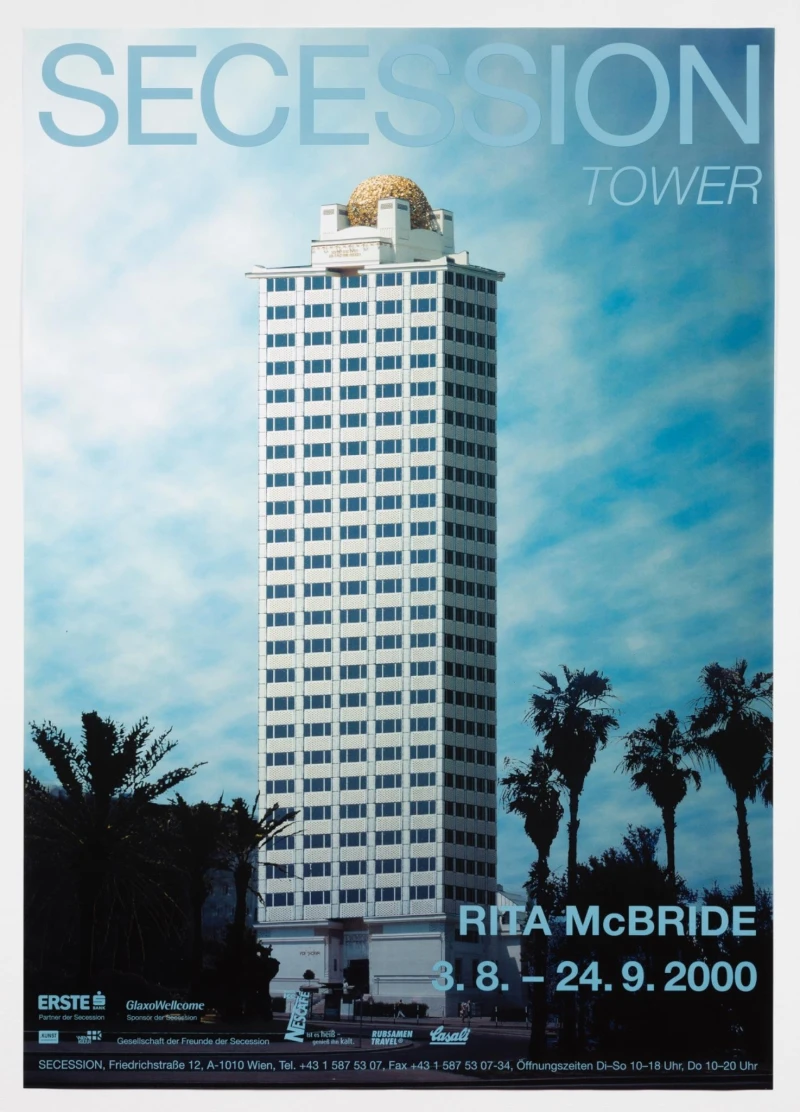
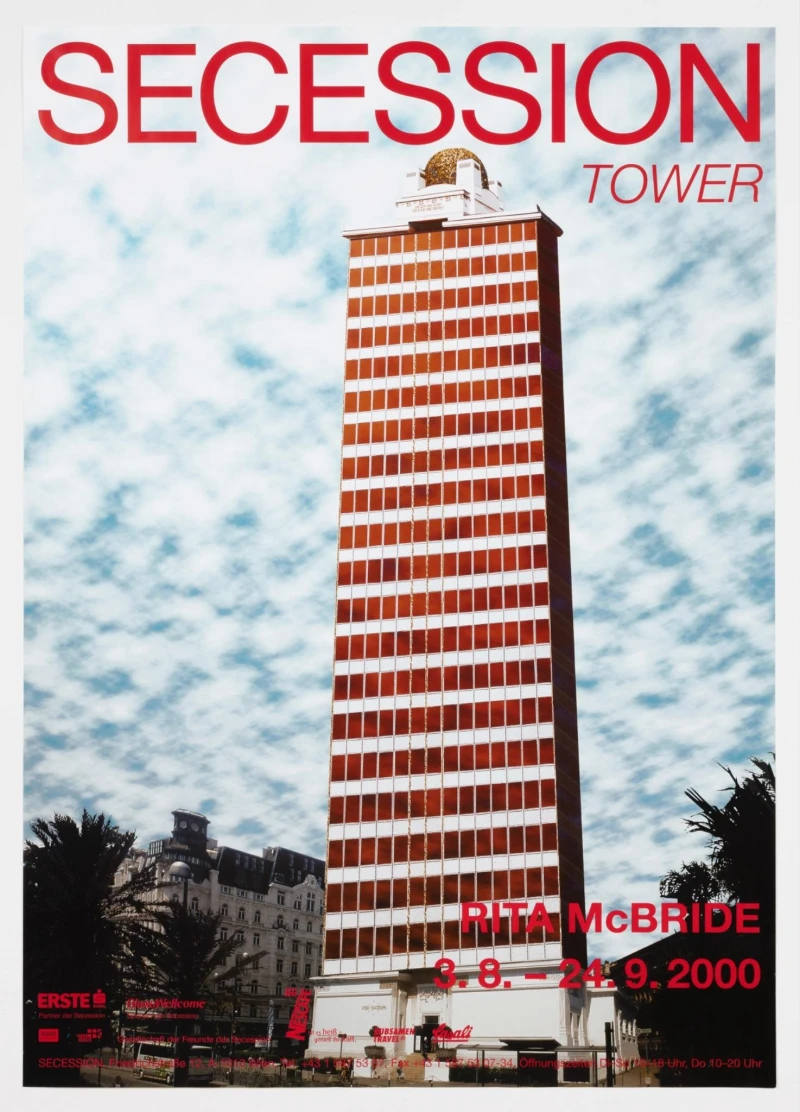
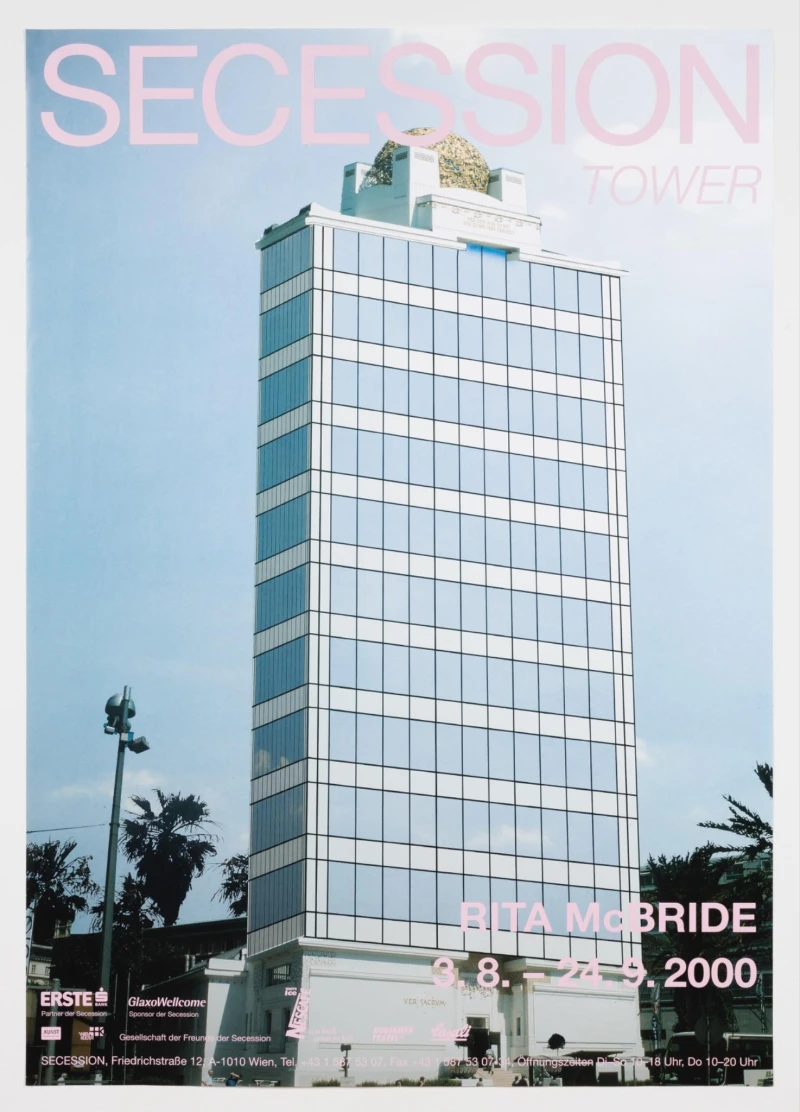
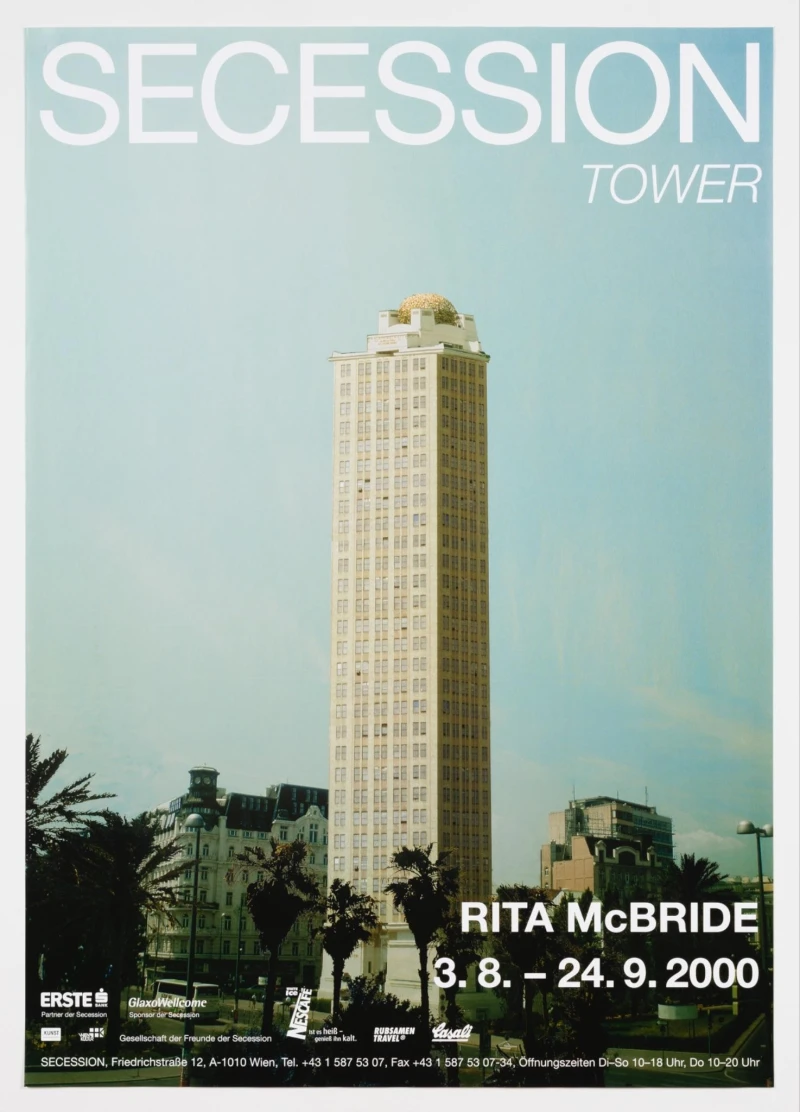
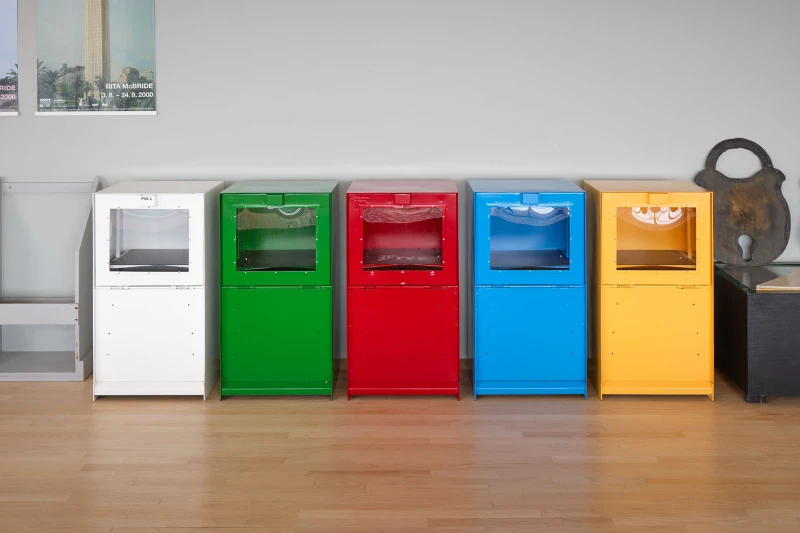
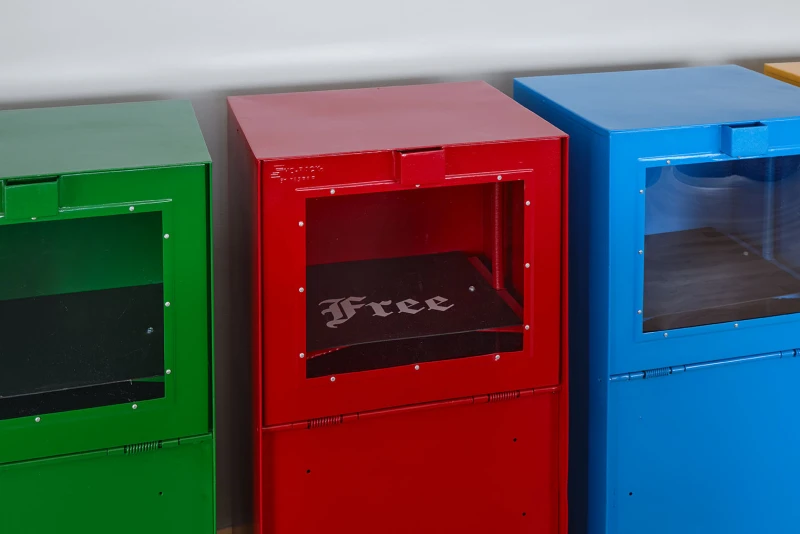
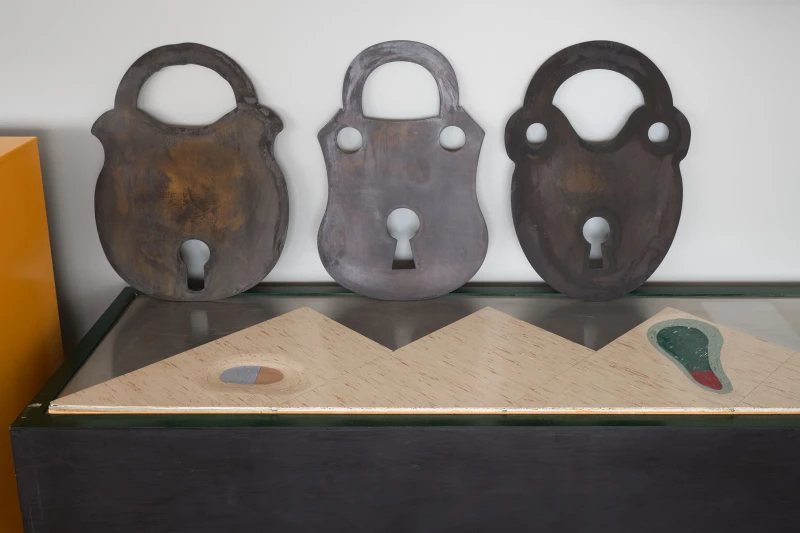
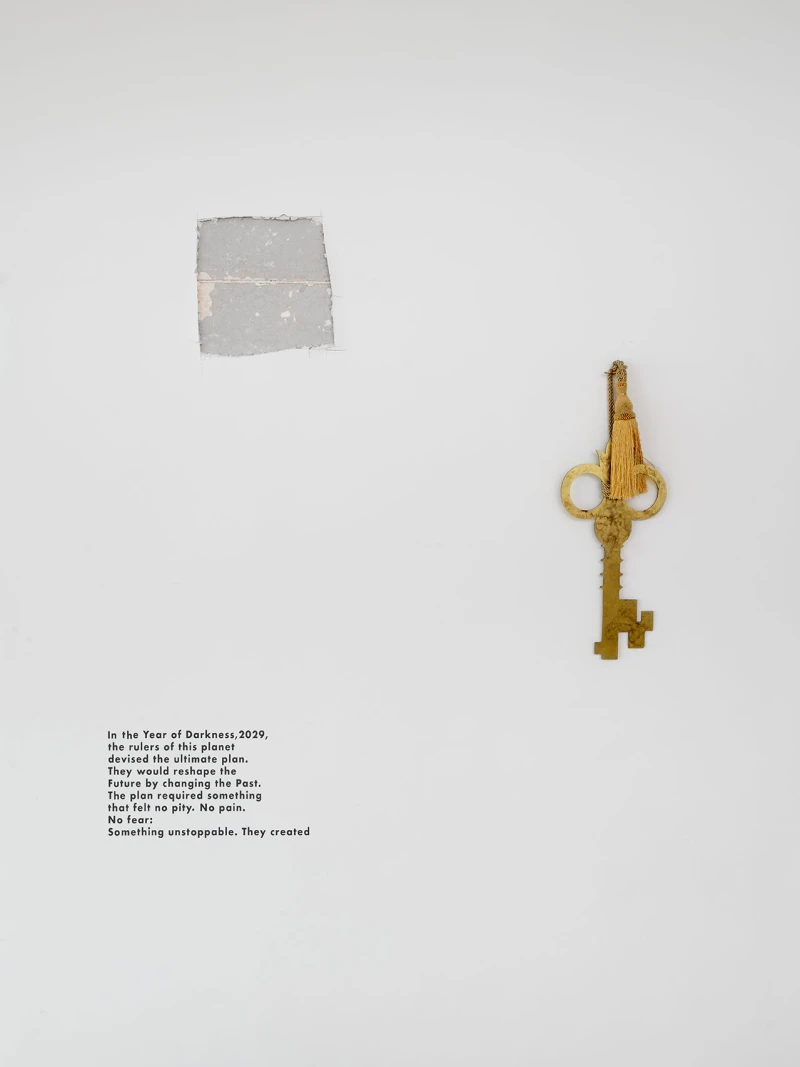
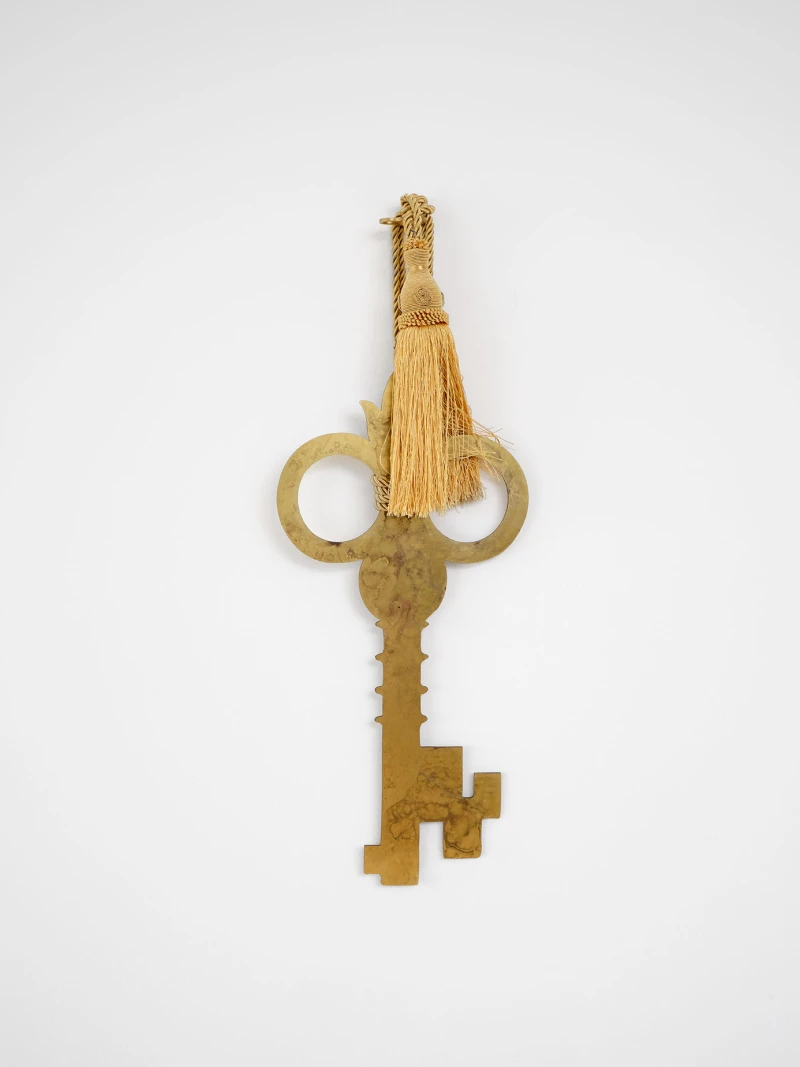
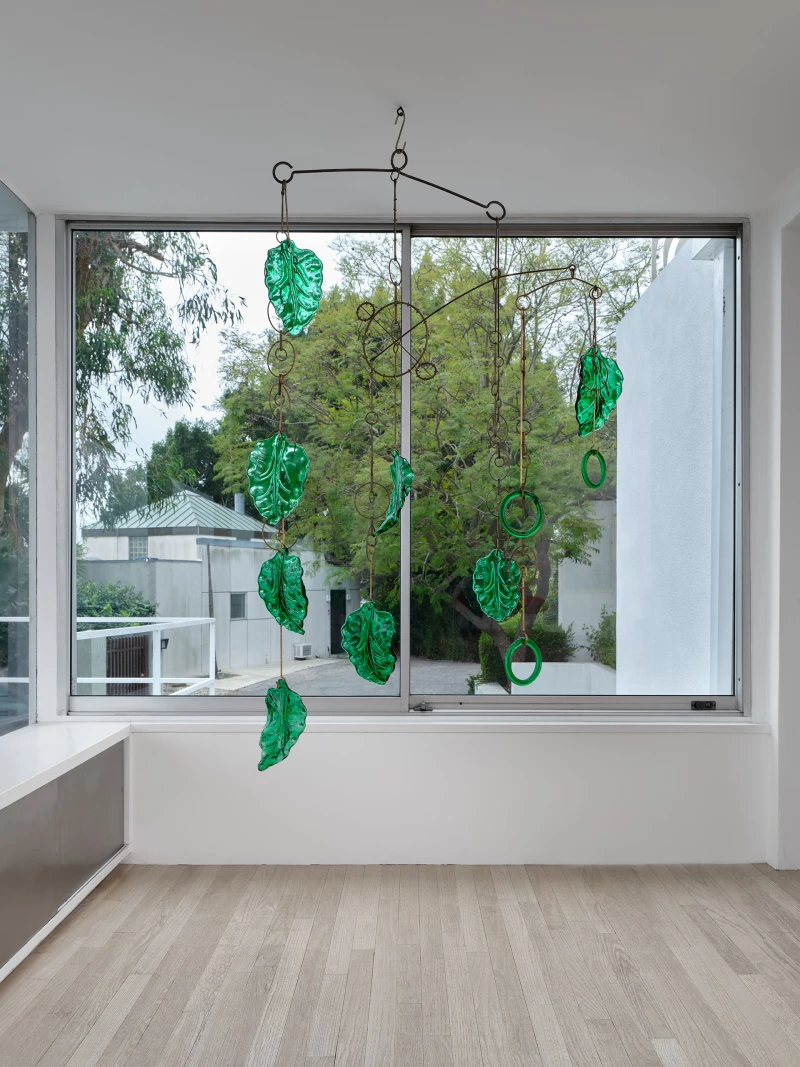
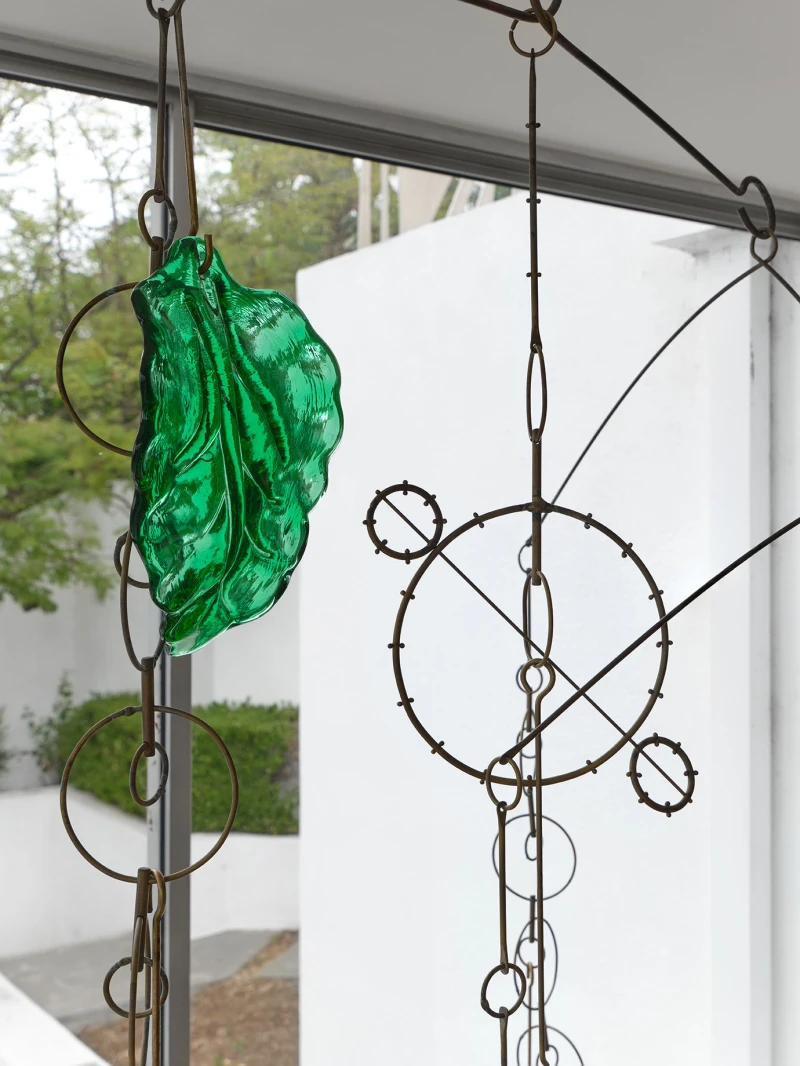
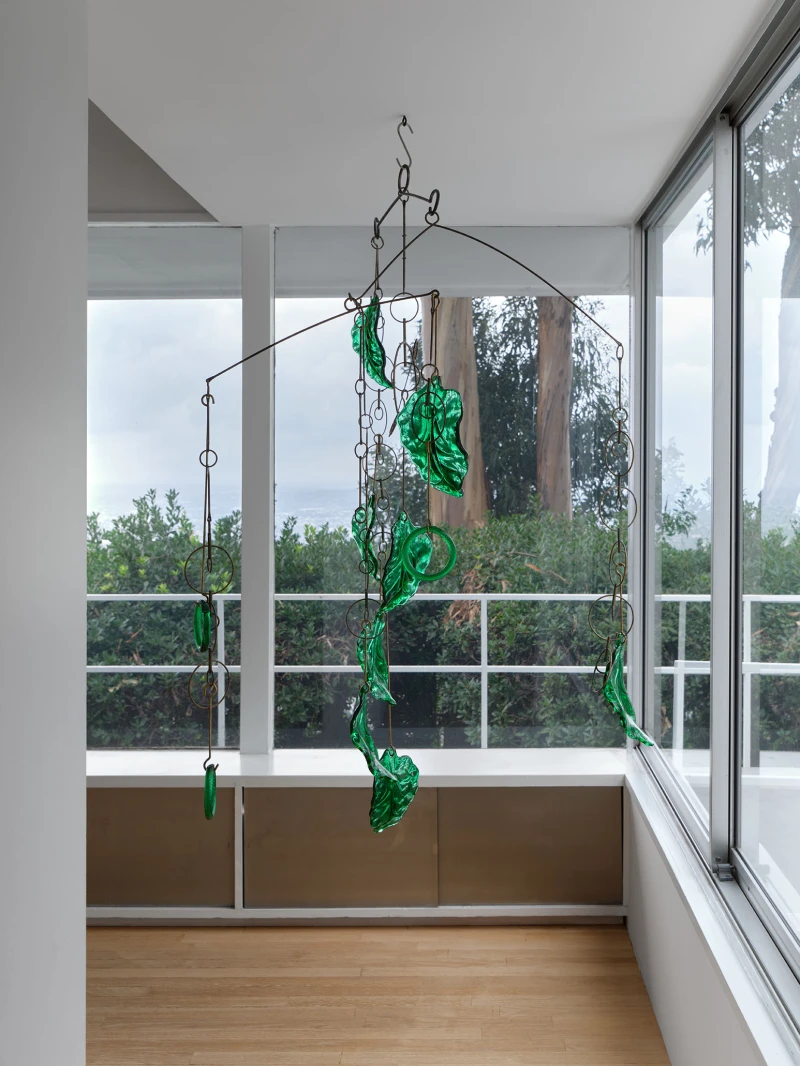
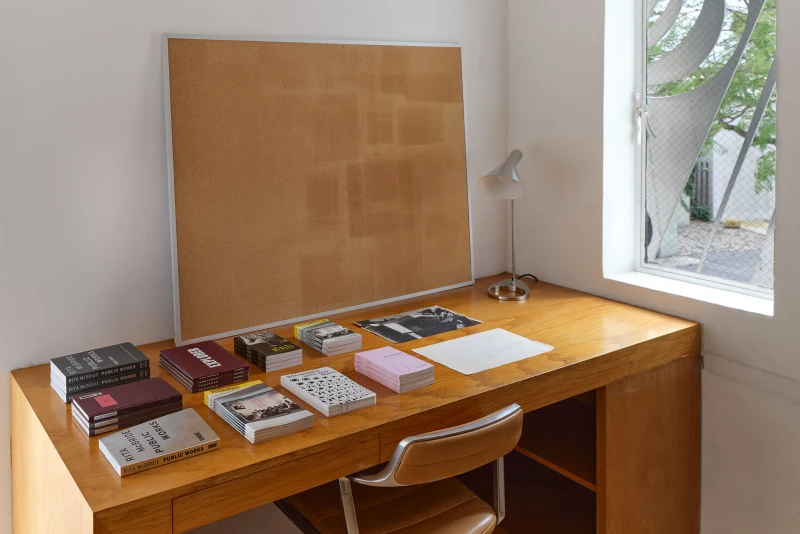
A caliper is erected at a colossal scale that transforms tool into spectacle; a mobile is constructed with Cosanti-wrought links and balanced with Murano-glass leaves; a promotional real-estate poster reimagines the Vienna Secession building as a luxury high-rise; a print is composed of a gestural, fax-warped reproduction of Le Corbusier’s designs for Algiers; highway ramps are coated with horizon-line hues and faded in the sun; silhouettes of gigantic keys and locks from around the world are cut out of brass sheets and patinaed; found newspaper dispensers are spray-painted into monochrome totems that house and disseminate free literature (such as this). Aspiring to precision, function, and idealism, Modernist architecture intrigues McBride with its inescapable complexities, failures, and humor. Her works test the extent to which the artist can approach democratic structures democratically, inviting both play and plan through actions of unlocking, tinkering, and reconfiguring. Like a body moving through space, these works orient rather than explain: implicit, visceral, and absurd.
Rita McBride (b. 1960 in Des Moines, Iowa) is an artist living and working in Southern California. With a career that has spanned the world, her practice is rooted in avant-garde education and architectural public work. She received her BA from Bard College in 1982 and her MFA from the California Institute of the Arts in 1987. In 1989, McBride was awarded the coveted Rome Prize from the American Academy in Rome, after which she spent several years working and exhibiting across Italy, Germany, Portugal, and the Netherlands. In 2000, she settled in Berlin with a DAAD residency, during which she served as a Professor of Sculpture at the Kunstakademie Munich. In 2003, she became a professor in the Integration of Art and Architecture program at the historic Kunstakademie Düsseldorf, where she went on to teach for two decades and served as the school’s Director from 2013 to 2017. McBride has realized ambitious, public installations, including Guide Rails (2017–2021), Brussels; Obelisk of Tutankhamen (2017), Cologne; Donkey’s Way (2016), Mönchengladbach; Artifacts (C.W.D.) (2015), New York; Bells and Whistles (2014), New York; and Mae West (2011)—a fifty-two-meter-high carbon fiber structure in the city center of Munich. She has staged solo presentations at institutions across Europe and the United States, most recently at the Bauhaus Museum, Dessau; Hammer Museum, Los Angeles; and Dia Beacon, New York.
Blue Heights Arts & Culture is based at the Galka Scheyer House in the Hollywood Hills. Galka Scheyer was a German-Jewish émigré and visionary art collector and dealer who championed the work of the artist group The Blue Four, which included Lyonel Feininger, Wassily Kandinsky, Alexej von Jawlensky, and Paul Klee. Built by the renowned architect Richard Neutra in 1934 in the Hollywood Hills, the house served as both her gallery and private residence, a space she envisioned as an airship—a respite and shelter for artists and intellectuals. After her death in 1945, the house became a private residence for eighty years, until a German art collector purchased it with the idea of transforming it into a vibrant space for art and culture, as Scheyer had conceived during her lifetime.
Del Vaz Projects is a 501(c)(3) nonprofit art space based in Los Angeles, California, which was founded by Jay Ezra Nayssan in 2014. Forging collaborations across vast generations and geographies, Del Vaz Projects is a curatorial platform that produces on-site and off-site exhibitions that are free and accessible to the public; a research collective comprised of fellows and freelancers who pair cutting-edge scholarship with experimental authorship to craft insightful texts for Del Vaz Projects’ shows and publications; an independent press that designs, publishes, and distributes artist books and exhibition catalogs—featuring critical texts commissioned by contemporary writers and cultural innovators; and an artist production fund that secures fiscal and material resources through their extended community of collaborators in order to support underfunded artists as they pursue ambitious projects.
OKEY DOKEY KONRAD FISCHER is a new project for exhibitions and presentations by Konrad Fischer Galerie, which has been based in Düsseldorf since 1967 and Berlin since 2007. Beginning with a series of shows in Los Angeles, presenting historic artists alongside contemporary artists, the project now includes an office in New York's Tribeca neighborhood, where there was a recent presentation of Bruce Nauman's Office Edit #1 from 2001. When Konrad Fischer Galerie was first founded in a small room in Düsseldorf, Minimal and Conceptual art were almost unknown in Europe. This new project is synonymous with the gallery's origins, concentrating on the essentials and a spirit of experimentation. The name of the project comes from a phrase Konrad Fischer frequently used, often ending conversations and letters with “Okey Dokey, Konrad Fischer.” Fischer was so well known for the saying that Sol LeWitt had a stamp with this inscription made especially for him, which now serves as the logo for the project.